
Lucknow
Private journeys, curated experiences and tailor-made routes through Lucknow.
Journeys
On request
Nearby Cities
0
Best Suited For
Private & tailor-made holidays
About Lucknow
Lucknow, the capital city of Uttar Pradesh, India, is a fascinating blend of history, culture, and modernity. Known as the City of Nawabs, Lucknow is famous for its rich Mughal and Awadhi heritage, stunning architecture, refined manners, delicious cuisine, and lively cultural scene. Whether you are interested in exploring historical landmarks, experiencing the city’s cuisine, or enjoying its vibrant markets, Lucknow offers a wide range of attractions. Here’s a guide to Lucknow tourism:
1. Bara Imambara
- Bara Imambara is one of the most iconic landmarks of Lucknow. Built in 1784 by Nawab Asaf-ud-Daula, it is a massive architectural marvel with a unique design. The complex houses the Asfi Mosque and a series of bowls and mazars (tombs), with the main hall being one of the largest arched constructions without support beams in the world.
- The Bhool Bhulaiya (the labyrinth) inside the Bara Imambara is a maze of narrow alleys and stairs, which is an exciting experience for visitors. The monument is also famous for its breathtaking architecture, showcasing the grandeur of the Mughal era.
2. Chota Imambara
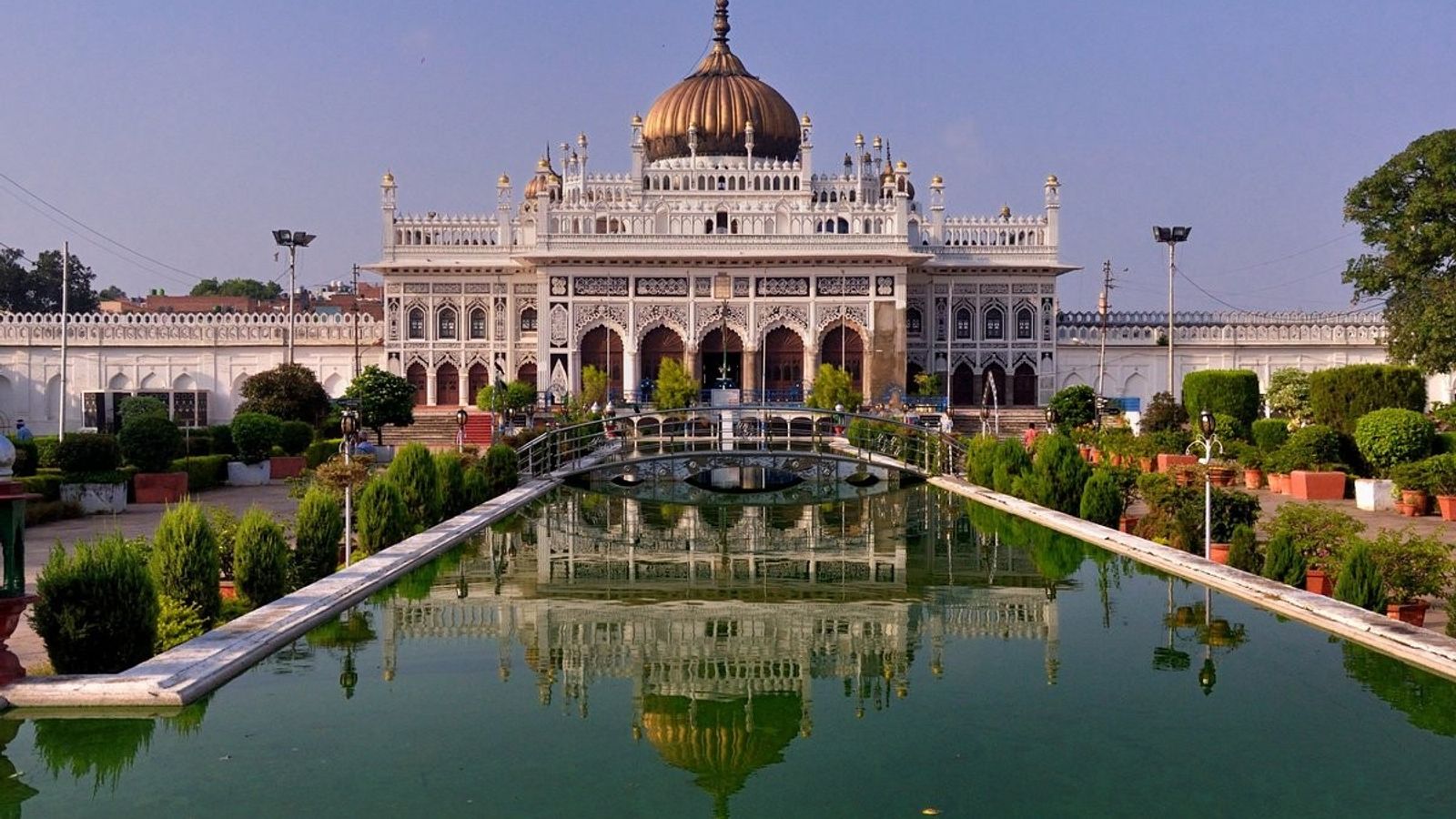
- Chota Imambara, also known as the Imambara of Hussainabad, was built in 1838 by Nawab Muhammad Ali Shah. This smaller but equally magnificent structure is famous for its exquisite decor, including crystal chandeliers and stunning calligraphy. It is also the final resting place of the Nawab and his family.
- The Tasveer Mahal (Mirror Palace) and the Dome are the main attractions of Chota Imambara, and it is also known for the annual Muharram processions that are held here.
3. Rumi Darwaza
- The Rumi Darwaza (also known as the Turkish Gate) is an imposing gateway that serves as a symbol of Lucknow’s historical grandeur. Built in the 18th century by Nawab Asaf-ud-Daula, the gate is an example of Awadhi architecture, and its intricate designs are reminiscent of Mughal structures.
- It stands as a grand entrance to the old city and is particularly beautiful when lit up at night.
4. Ambedkar Memorial Park
- Ambedkar Memorial Park, also known as Dr. Bhimrao Ambedkar Samajik Parivartan Sthal, is an expansive park dedicated to the life and legacy of Dr. Bhimrao Ambedkar, the architect of the Indian Constitution. The park has several statues and memorials, including a 125-feet-tall statue of Dr. Ambedkar.
- The park is beautifully landscaped and features large open spaces, making it a popular spot for leisurely walks and relaxation.
5. Lucknow Zoo (The Nawab Wajid Ali Shah Prani Udyan)
- The Lucknow Zoo, also known as the Nawab Wajid Ali Shah Prani Udyan, is a must-visit for animal lovers and families. It is home to a variety of animals, including tigers, lions, bears, and deer, along with an array of bird species.
- The zoo is set in lush green surroundings and is a pleasant place to spend the day, especially with children.
6. Hussainabad Clock Tower
- The Hussainabad Clock Tower is one of the tallest clock towers in India, located near the Chota Imambara. Built in 1881, it is a beautiful example of Victorian-style architecture with intricate detailing. The clock tower is a prominent feature of the city’s skyline and offers a historic charm to the surroundings.
7. La Martinière College
- La Martinière College is an architectural gem of Lucknow, with its European-style design. Established in 1845, the college building is an impressive blend of Greek and Roman styles and features stunning gardens and a well-maintained campus. Though it's a school, the structure is worth a visit for its architectural beauty.
8. Hazratganj Market
- Hazratganj Market is the heart of Lucknow’s shopping scene. The bustling market is lined with shops selling everything from chikan embroidery (a traditional form of Lucknowi embroidery) to sarees, jewelry, books, and souvenirs.
- Hazratganj is also known for its vibrant street food scene and is home to several popular food stalls and restaurants that serve tunday kebabs, galouti kebabs, and other Awadhi delicacies.
9. Kaiserbagh Palace
- The Kaiserbagh Palace was built by Nawab Wajid Ali Shah in the 19th century and is an impressive example of Awadhi architecture. Though much of the palace complex is now in ruins, visitors can still get a glimpse of the grandeur of the Nawabi era.
- The palace is located near the city center and is a historically significant site that adds to the cultural charm of Lucknow.
10. Moti Mahal
- Moti Mahal was the residence of the last Nawab of Lucknow, Wajid Ali Shah, and is famous for its opulent interiors and beautiful garden. It is known for its historical significance, as the Nawab’s court was held here during his reign. Though much of it is in ruins, it remains an important landmark for those interested in the history of the region.
11. Chikan Embroidery
- Lucknow is famous for its delicate chikan embroidery, a traditional form of hand-embroidery that uses fine thread to create intricate patterns. You can buy beautiful chikan kurtas, sarees, scarves, and shawls from markets like Hazratganj, Aminabad, and Bada Imambara.
- You can also visit workshops where artisans demonstrate the art of chikan work.
12. Cuisine and Street Food
- Awadhi cuisine is one of the highlights of Lucknow tourism. Don’t miss the famous Tunday Kebab, Galouti Kebab, Korma, and Biryani. These dishes are served in local restaurants and eateries like Tunday Kebab, Moti Mahal, and Idris Biryani.
- Street food is also a major attraction, with stalls offering chaat, pani puri, samosas, and kulfi scattered across the city.
13. Best Time to Visit
- The best time to visit Lucknow is between October and March when the weather is pleasant, and the city’s outdoor attractions can be enjoyed comfortably.
- Summers (April to June) can be quite hot, with temperatures often exceeding 40°C (104°F), making it less ideal for outdoor sightseeing.
14. How to Reach Lucknow
- By Air: Lucknow’s Chaudhary Charan Singh International Airport is well-connected to major cities in India and abroad. It is about 15 km from the city center.
- By Train: Lucknow is well-connected by train to all major cities, including Delhi, Kolkata, Mumbai, and Varanasi. Lucknow Junction is the main railway station.
- By Road: The city is accessible by road from all major cities in northern India. Lucknow is well-connected by a network of highways to Delhi, Kanpur, Agra, and Varanasi.
Lucknow is a city that beautifully blends history, culture, and modern life. From its royal Imambaras and grand gates to its delicious Awadhi cuisine and shopping streets, Lucknow offers a unique experience for travelers. Whether you’re exploring the Bara Imambara, savoring kebabs, or strolling through the markets, the city offers something for everyone. A visit to Lucknow will leave you with a sense of awe for its rich cultural heritage and a taste of its royal past.