
Mandu
Private journeys, curated experiences and tailor-made routes through Mandu.
Journeys
On request
Nearby Cities
0
Best Suited For
Private & tailor-made holidays
About Mandu
Mandu Travel Guide – The City of Joy and Romance
Perched atop the scenic Vindhya Hills in western Madhya Pradesh, Mandu, also known as Mandavgarh, is one of India's most enchanting heritage destinations. Surrounded by lush valleys, ancient stone walls, and picturesque lakes, this fortified city is celebrated for its magnificent Afghan architecture, romantic legends, and breathtaking landscapes.
Once the capital of the Malwa Sultanate during the 15th and 16th centuries, Mandu flourished as a centre of art, culture, music, and architecture. Today, its impressive palaces, mosques, pavilions, gateways, and royal tombs stand as remarkable reminders of its glorious past.
Mandu is perhaps best known for the legendary love story of Sultan Baz Bahadur and Rani Roopmati, whose romance has become an enduring symbol of the city. Visitors can admire the elegant Jahaz Mahal, explore the grand Baz Bahadur Palace, enjoy panoramic views from Rani Roopmati Pavilion, and wander through beautifully preserved monuments surrounded by natural beauty.
Whether you're passionate about history, architecture, photography, or simply looking for a peaceful escape, Mandu offers one of the most rewarding heritage experiences in Central India.
Why Visit Mandu?
- Explore one of India's finest fortified cities
- Admire magnificent Afghan and Indo-Islamic architecture
- Discover the romantic story of Baz Bahadur and Rani Roopmati
- Visit impressive palaces, mosques, and royal tombs
- Enjoy breathtaking views over the Narmada Valley
- Perfect destination for history and architecture lovers
- Less crowded than many famous heritage sites
- Ideal for photography enthusiasts
- Easily combined with Maheshwar, Omkareshwar, and Indore
Top Attractions in Mandu
Jahaz Mahal (Ship Palace)
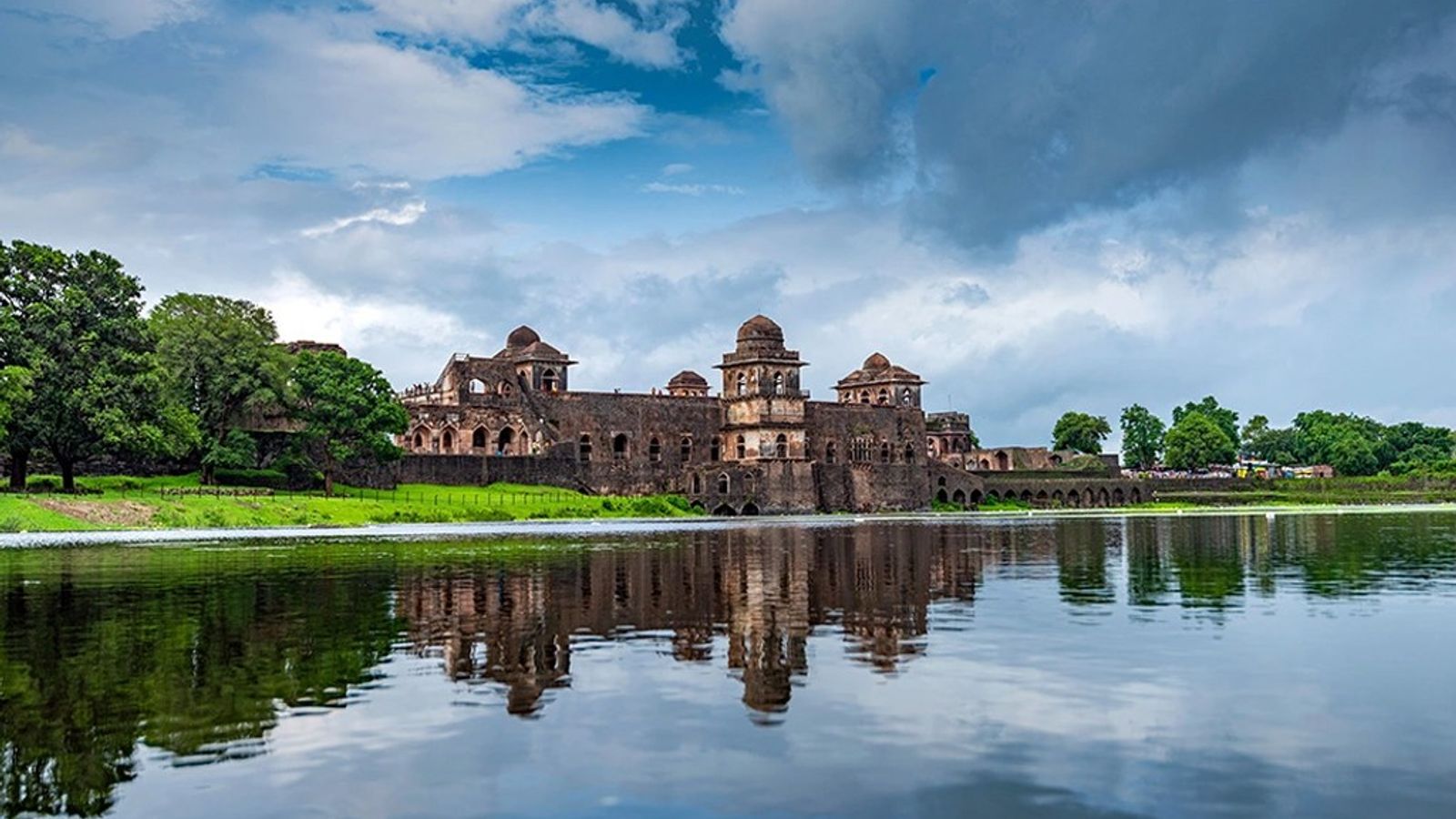
The most iconic monument in Mandu, Jahaz Mahal appears to float between two artificial lakes, giving it the appearance of a magnificent ship. Built during the late 15th century, the palace is admired for its elegant design, cooling water systems, and panoramic views.
Rani Roopmati Pavilion
Perched on the edge of the plateau, this graceful pavilion offers spectacular views of the Narmada Valley. According to legend, Rani Roopmati would gaze towards the sacred Narmada River from here every day before taking her meals.
Baz Bahadur Palace
Known for its elegant courtyards, halls, and excellent acoustics, Baz Bahadur Palace reflects a harmonious blend of Rajput and Mughal architectural styles and commemorates Mandu's legendary ruler.
Hindola Mahal
Meaning "Swinging Palace," Hindola Mahal is famous for its dramatically sloping walls that create the illusion of a giant swing. It served as the audience hall of the royal court.
Jami Masjid
Inspired by the Great Mosque of Damascus, the Jami Masjid is one of India's finest examples of Afghan architecture, featuring grand domes, spacious courtyards, and elegant arches.
Hoshang Shah's Tomb
India's first marble mausoleum, Hoshang Shah's Tomb is believed to have inspired the architects of the Taj Mahal. Its beautifully carved marble dome and symmetrical design remain architectural masterpieces.
Ashrafi Mahal
Originally built as an Islamic school, Ashrafi Mahal later became a royal complex featuring impressive ruins that offer insight into Mandu's medieval history.
Rewa Kund
This historic reservoir supplied water to Baz Bahadur Palace and is closely associated with the love story of Baz Bahadur and Rani Roopmati.
Hidden Gems
- Dai Ka Mahal
- Dai Ki Chhoti Behen Ka Mahal
- Nilkanth Temple
- Echo Point
- Sunset Point
- Lohani Caves
- Caravan Sarai
- Delhi Gate
- Alamgir Gate
Things to Do in Mandu
- Explore historic palaces and forts
- Watch the sunset from Rani Roopmati Pavilion
- Visit beautiful lakes and reservoirs
- Enjoy heritage photography
- Learn about Mandu's fascinating history
- Attend the Mandu Festival (if visiting during the event)
- Experience local cuisine
- Take guided heritage walks
- Visit nearby villages and handicraft markets
Cultural Experiences
Mandu showcases the rich cultural heritage of the Malwa region through its architecture, music, folklore, festivals, and traditional crafts. Guided tours reveal fascinating stories about its rulers, poets, musicians, and remarkable engineering achievements.
Local Festivals
- Mandu Festival
- Diwali
- Holi
- Navratri
- Malwa Utsav
- Local cultural and folk music festivals
Best Time to Visit
October to March
The best season for sightseeing, heritage walks, photography, and exploring monuments in pleasant weather.
July to September
The monsoon transforms Mandu into a lush green paradise, with waterfalls, mist-covered hills, and scenic landscapes making it one of the most beautiful times to visit.
April to June
Summer temperatures can be high, but early morning and evening sightseeing remain enjoyable.
How to Reach
By Air
Nearest Airports:
- Indore – Approximately 100 km
- Devi Ahilya Bai Holkar Airport (Indore)
By Rail
Nearest Railway Stations:
- Indore
- Ratlam
- Mhow
By Road
Well connected by road from:
- Indore – 100 km
- Maheshwar – 40 km
- Omkareshwar – 70 km
- Dhar – 35 km
Getting Around
- Private chauffeur-driven vehicles
- Local taxis
- Auto-rickshaws
- Guided walking tours
Where to Stay
Luxury
- Heritage resorts
- Boutique heritage hotels
- Premium resorts
Mid-Range
- Comfortable hotels
- Boutique accommodations
- Heritage guesthouses
Budget
- Budget hotels
- Guesthouses
- Homestays
Local Cuisine
Don't miss:
- Dal Bafla
- Poha
- Bhutte Ka Kees
- Malpua
- Kachori
- Jalebi
- Traditional Malwa cuisine
- Regional vegetarian specialties
Shopping
Popular purchases include:
- Handloom textiles
- Tribal handicrafts
- Maheshwari sarees
- Wooden handicrafts
- Stone carvings
- Local spices
- Handmade souvenirs
Suggested Duration
1–2 Days
A stay of one to two days is ideal for exploring Mandu's major monuments, enjoying panoramic viewpoints, and experiencing its fascinating history.
Suggested Itinerary
Day 1
- Jahaz Mahal
- Hindola Mahal
- Jami Masjid
- Hoshang Shah's Tomb
- Ashrafi Mahal
Day 2
- Baz Bahadur Palace
- Rani Roopmati Pavilion
- Rewa Kund
- Nilkanth Temple
- Sunset Point
Nearby Places to Visit
Is Mandu Safe for Solo Travellers?
Yes. Mandu is a peaceful and safe destination for solo travellers, including international visitors. The archaeological sites are well maintained and attract visitors throughout the year. Solo travellers should use registered guides if they wish to explore the history in depth, carry water while sightseeing, and avoid isolated areas after dark.
Why Book with Discovery Full Circle Tours?
At Discovery Full Circle Tours, we have been creating memorable journeys across India since 2004. Our carefully planned heritage tours of Mandu combine history, architecture, culture, and local experiences, allowing you to discover one of Central India's most captivating destinations.
Why Choose Us?
✔ Over 20 years of trusted travel expertise
✔ Tailor-made Madhya Pradesh heritage tours
✔ Carefully selected hotels and heritage properties
✔ Professional local guides
✔ Comfortable private transportation
✔ Transparent pricing with no hidden costs
✔ 24/7 travel assistance
✔ Safe travel arrangements for solo travellers
✔ Authentic cultural and historical experiences
✔ Dedicated customer support from arrival to departure
Whether you're fascinated by medieval architecture, legendary romances, or India's rich cultural heritage, Discovery Full Circle Tours ensures an unforgettable journey through the timeless beauty of Mandu.
Frequently Asked Questions
What is Mandu famous for?
Mandu is famous for its magnificent Afghan architecture, Jahaz Mahal, Rani Roopmati Pavilion, Baz Bahadur Palace, historic forts, and the legendary love story of Baz Bahadur and Rani Roopmati.
How many days are enough for Mandu?
A 1–2 day visit is ideal for exploring Mandu's major monuments and scenic viewpoints.
What is the best time to visit Mandu?
October to March offers pleasant weather, while the monsoon season (July to September) transforms Mandu into a lush green landscape with beautiful views.
Is Mandu suitable for families?
Yes. Mandu is an excellent destination for families, history enthusiasts, photographers, and couples interested in heritage and architecture.
Is Mandu safe for solo travellers?
Yes. Mandu is considered a safe and welcoming destination for solo travellers.
Which airport is nearest to Mandu?
Devi Ahilya Bai Holkar Airport in Indore is the nearest airport, approximately 100 km away.
Can Mandu be combined with other destinations?
Yes. Mandu is commonly combined with Maheshwar, Omkareshwar, Indore, Ujjain, Dhar, and other destinations in Madhya Pradesh for a rewarding heritage and cultural tour.