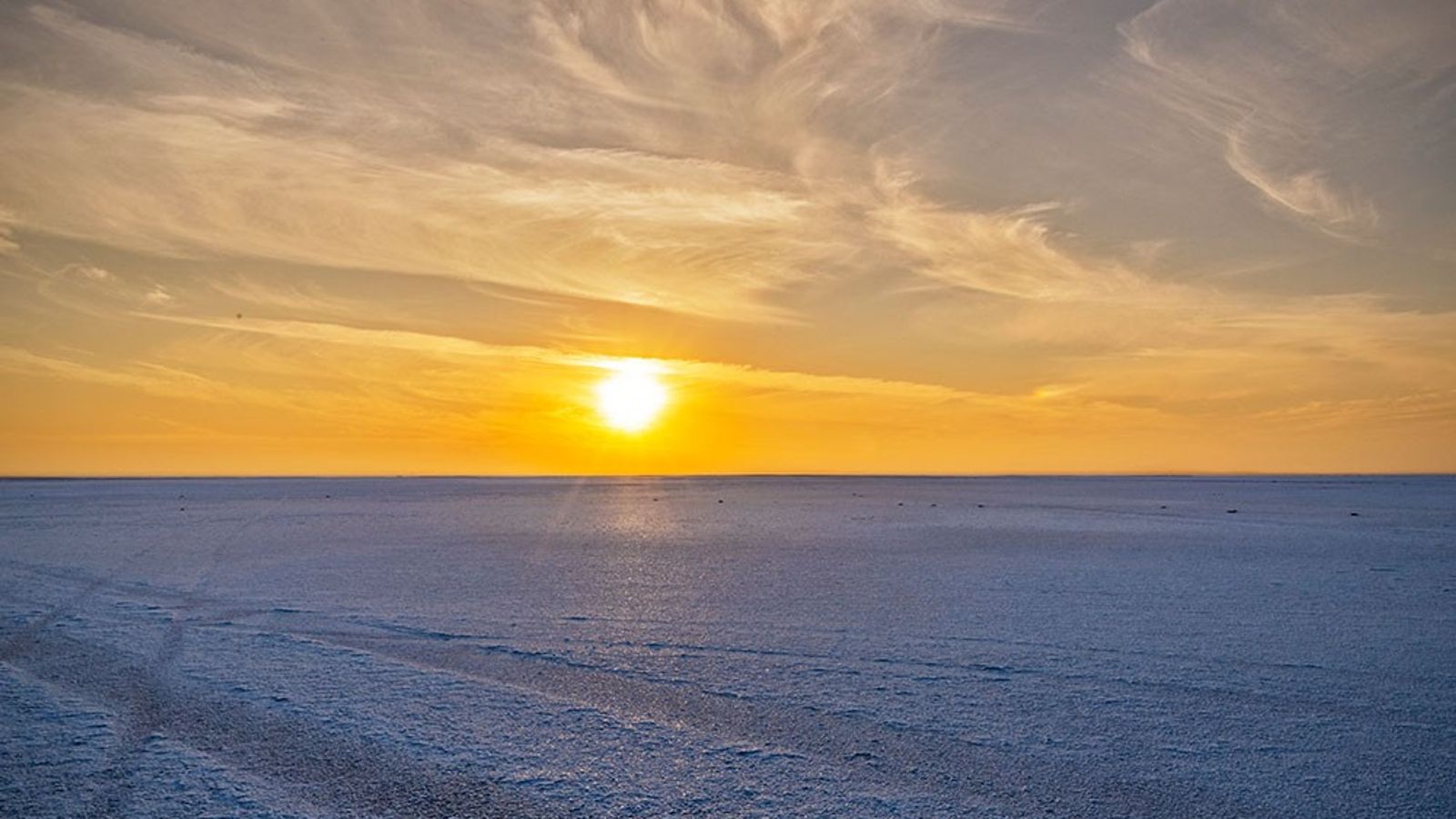
There is a moment right before sunset in the Great Rann of Kutch where the horizon completely vanishes. Stand out far enough on the white salt crust, and the line separating the stark, cracked earth from the pastel sky dissolves entirely. You are quite literally standing in a vast, salt-rimmed infinity.
If you’re planning a trip to India's most surreal geographic wonder, you've likely seen the stunning photos. But turning those pictures into a smooth, actual travel experience requires some strategic planning. From securing mandatory border permits to timing the full moon, here is everything you actually need to know about visiting the Rann of Kutch.
What Exactly is the Rann of Kutch?
The Great Rann of Kutch is one of the largest salt deserts in the world, stretching across more than 7,500 square kilometers in the Thar Desert of Gujarat. For most of the year, this massive basin is submerged in sea water from the Arabian Sea. As the water evaporates during the scorching summer months, it leaves behind a thick, crunchy, blindingly white sheet of pure salt.
While the salt desert itself is the headline act, the broader Kutch region is a living museum of incredible textile heritage, ancient mud-hut architecture, and unique wildlife.
Timing Your Trip: The Full Moon Magic & Weather
The salt desert is entirely seasonal. If you visit in July, you will find a shallow sea instead of a white desert.
- Peak Season (November to February): This is the sweet spot. The water has dried up, the salt is packed solid, and the winter weather drops to a pleasant 15°C to 25°C during the day, though desert nights can drop significantly lower.
- The Full Moon Phenomenon: If you can, align your travel dates with the full moon cycle. The way the bright moonlight reflects off the flat salt pan creates an eerie, hypnotic silver glow that feels completely otherworldly.
The Rann Utsav Experience
Every winter, the Gujarat Tourism department hosts the Rann Utsav, a massive cultural festival that runs from late October through early March.
The epicenter of the festival is Dhordo, a village that was recently recognized as one of the UNWTO's Best Tourism Villages. Here, a literal "Tent City" pops up overnight, featuring hundreds of luxury tents, food halls serving authentic Kutchi cuisine, and nightly folk music and dance performances under the desert sky.
Even if you prefer to bypass the massive crowds of Tent City, the festive energy across Kutch during these months is contagious. You can watch local artisans practice Bandhani (tie-dye art), intricate Ajrakh block printing, and leathercraft that has been passed down through generations.
Beyond the Salt: Must-See Stops in Kutch
To get a true sense of the region, don't just stay on the salt flats. Make time for these essential detours:
- Kalo Dungar (The Black Hill): This is the highest point in Kutch. From the summit, you get a panoramic look across the northern salt flats all the way to the Pakistani border. It is also famous for the 400-year-old Dattatreya Temple, where wild jackals gather daily for a feeding ritual.
- The Heritage City of Bhuj: Your gateway to the region. Take a day to wander through the cinematic, earthquake-ruined royal cenotaphs at Chhatardi Bhuj, the mirror-lined halls of Aaina Mahal, and the imposing Prag Mahal.
- Traditional Villages (Hodka & Gandhi Nu Gam): This is where you can see Bhungas—circular mud houses with thatched roofs engineered perfectly to withstand both the desert heat and powerful earthquakes.
Frequently Asked Questions (FAQs)
Do I need a permit to visit the Rann of Kutch?
Yes. Because the Rann shares a direct border with Pakistan, an official government permit is mandatory for all visitors. You can apply easily online through the official Gujarat Tourism portal or obtain a physical copy at the Bhirandiyara checkpoint on your way to the desert. You will need a valid government-issued ID (like an Aadhaar card or passport).
How do I reach the Rann of Kutch?
The closest transit hub is Bhuj, which has its own domestic airport and a well-connected railway station with direct trains from Mumbai, Delhi, and Ahmedabad. From Bhuj, the salt flats at Dhordo are about 85 kilometers (around a 1.5 to 2-hour drive) via smooth, well-maintained roads.
What should I pack for a desert trip?
Pack in layers. The desert sun is intense during the daytime, so you will want light linen or cotton clothes, sunglasses, a wide-brimmed hat, and plenty of sunscreen. However, temperatures plummet sharply after sunset, so a heavy fleece jacket, woolen socks, and a scarf are absolute essentials for night safaris.
Is the Rann of Kutch suitable for solo or family travel?
Absolutely. The entire region is highly safe, incredibly hospitable, and structurally well-managed, making it fantastic for family vacations, couples, and solo travelers alike.