
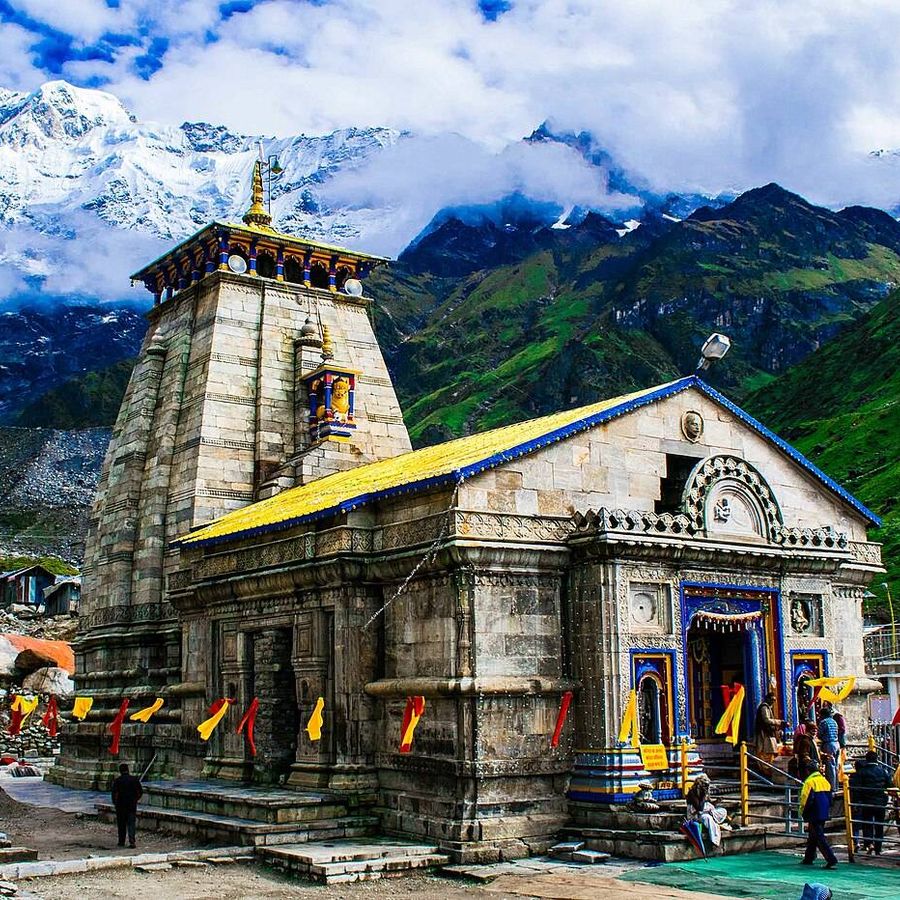
Why Kedarnath holds supreme spiritual power
Kedarnath is one of the twelve Jyotirlingas of Lord Shiva and one of the four shrines of the Char Dham pilgrimage. Legend holds that the Pandavas built the original temple after seeking Shiva’s forgiveness for the bloodshed of the Kurukshetra war; Shiva, avoiding them, took the form of a bull and dove underground here, leaving his hump behind as the object of worship.
A journey through millennia
The stone temple seen today is credited to Adi Shankaracharya, who is believed to have rebuilt and revived the shrine in the 8th century CE after the original structure fell into disuse. The temple has survived floods, avalanches, and the devastating 2013 Uttarakhand flood largely intact, which locals regard as a sign of divine protection.
Visual glimpses of Kedarnath
Ready for your Yatra to Kedarnath?
Our travel specialists organize private vehicles, VIP temple darshan arrangements, and comfortable hotel stays.