
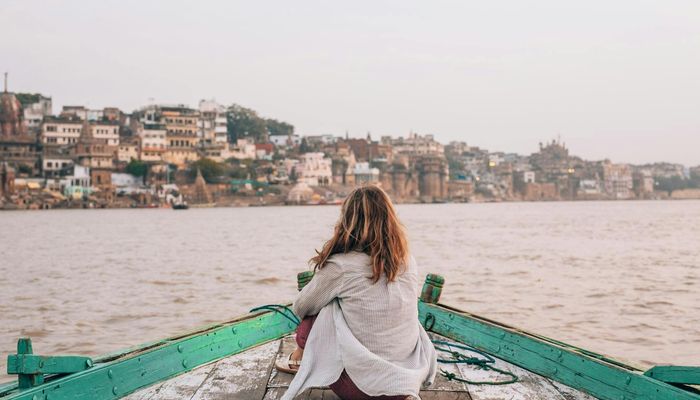
Sacred Origin
Why Varanasi holds supreme spiritual power
Varanasi, also called Kashi or Banaras, is one of the oldest continuously inhabited cities in the world and is held to be Lord Shiva's own city. The Kashi Vishwanath Temple houses one of the twelve Jyotirlingas, and dying within the city is traditionally believed to grant moksha (liberation).
Chronicles & Heritage
A journey through millennia
Texts describe Varanasi as a centre of learning, philosophy, and the arts for over 3,000 years. The current Kashi Vishwanath Temple was rebuilt in 1780 by Maharani Ahilyabai Holkar of Indore after earlier structures were repeatedly destroyed; the gold-plated domes were added by Maharaja Ranjit Singh in 1839.
Sanctuary Imagery
Visual glimpses of Varanasi
Private Pilgrimage Concierge
Ready for your Yatra to Varanasi?
Our travel specialists organize private vehicles, VIP temple darshan arrangements, and comfortable hotel stays.