Ayurveda in India: The Ancient Science of Healing
India is the birthplace of Ayurveda, one of the world's oldest systems of holistic medicine. The word Ayurveda is derived from two Sanskrit words: "Ayu" meaning life and "Veda" meaning knowledge or science. Together, Ayurveda translates as "The Science of Life." This ancient healthcare system focuses not only on treating illness but also on maintaining overall well-being and preventing disease through balanced living.
For thousands of years, Ayurveda has guided people toward healthier lifestyles through natural remedies, herbal formulations, dietary practices, meditation, yoga, and therapeutic treatments. Today, Ayurveda remains an important part of India's wellness heritage and continues to attract visitors seeking natural healing and rejuvenation.
Origins of Ayurveda
Ayurveda is believed to have originated more than 5,000 years ago and is closely associated with ancient Indian traditions and Vedic knowledge. Classical Ayurvedic wisdom was compiled into renowned texts such as the Charaka Samhita and Sushruta Samhita, which continue to influence Ayurvedic practice today.
The central philosophy of Ayurveda is that good health is achieved when there is balance between the body, mind, spirit, and environment.
The Principles of Ayurveda
According to Ayurveda, every individual possesses a unique constitution known as Prakriti. This constitution is governed by three fundamental energies or doshas:
Vata
Associated with movement, creativity, and communication.
Pitta
Associated with metabolism, digestion, and transformation.
Kapha
Associated with stability, strength, and immunity.
Ayurvedic practitioners aim to restore balance among these doshas through personalized treatments, dietary recommendations, lifestyle adjustments, and herbal remedies.
Popular Ayurvedic Treatments
Panchakarma Therapy
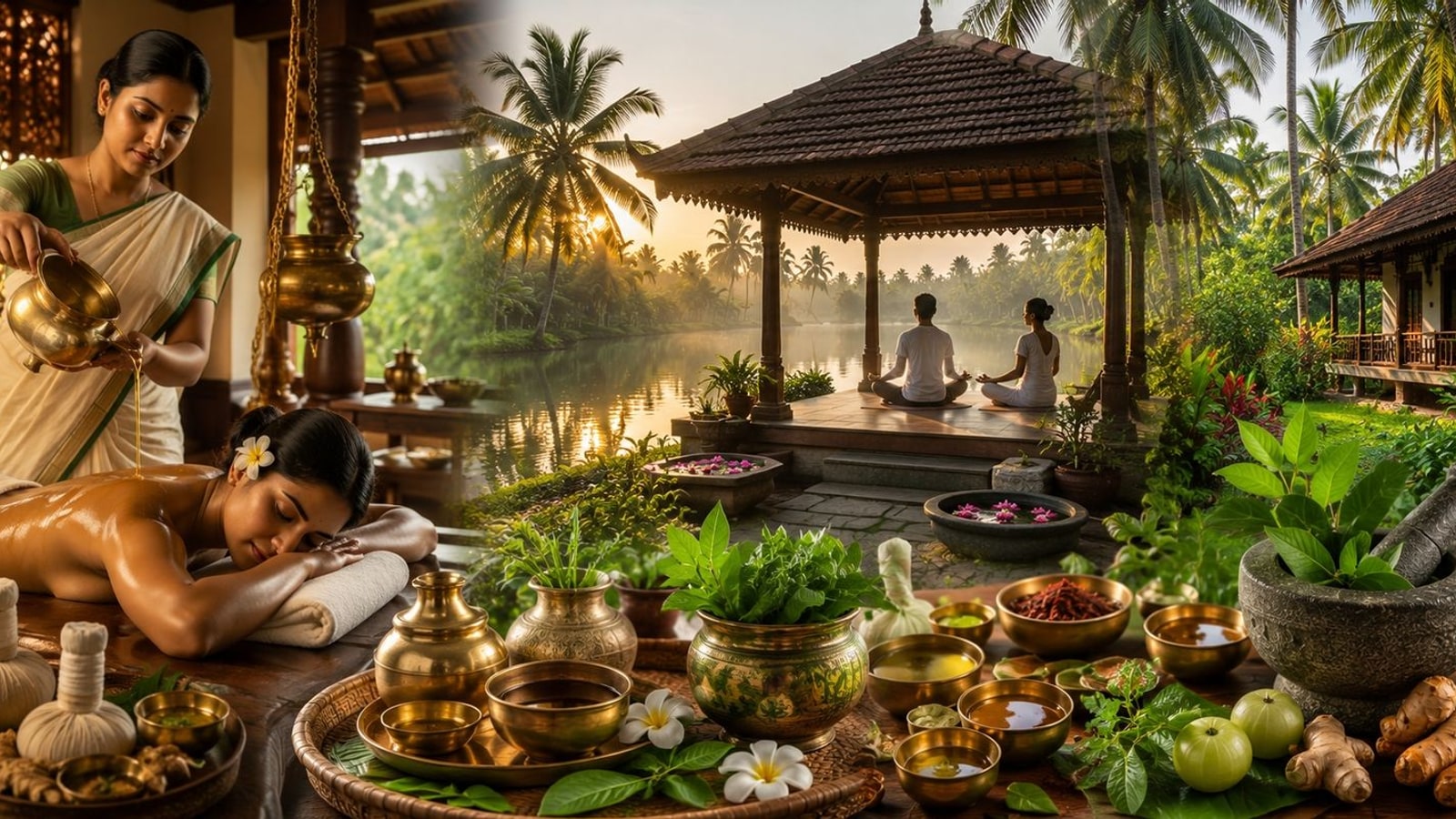
Panchakarma is one of Ayurveda's most renowned cleansing and rejuvenation therapies. It focuses on detoxification and restoring balance within the body.
Benefits may include:
- Stress reduction
- Improved digestion
- Enhanced energy levels
- Better overall well-being
Abhyanga Massage
A traditional full-body massage using warm herbal oils designed to promote relaxation and improve circulation.
Shirodhara
A soothing therapy where warm herbal oil is gently poured onto the forehead to encourage relaxation and mental clarity.
Herbal Therapies
Ayurveda utilizes a wide variety of medicinal plants and herbal formulations that have been used for generations as part of holistic wellness practices.
Kerala: The Home of Ayurveda
Kerala is widely regarded as India's premier destination for Ayurvedic wellness. The state's tropical climate, abundant medicinal plants, and centuries-old healing traditions make it an ideal location for authentic Ayurvedic treatments.
Visitors can experience:
- Panchakarma programs
- Rejuvenation therapies
- Yoga and meditation retreats
- Wellness resorts
- Herbal treatment programs
Popular Ayurvedic destinations include:
Ayurveda and Wellness Tourism
India has emerged as a leading destination for wellness tourism, with Ayurveda playing a significant role in attracting international visitors. Wellness travelers often combine Ayurvedic treatments with yoga tour, meditation, cultural experiences, and nature-based holidays.
Many visitors choose programs ranging from a few days of relaxation to multi-week wellness and rejuvenation retreats.
Ayurveda and Modern Interest
In recent years, Ayurveda has gained increasing international attention as researchers continue to explore its principles and traditional practices through modern scientific methods. Interest in preventive healthcare, holistic wellness, and natural therapies has contributed to Ayurveda's growing global appeal.
Benefits of an Ayurvedic Holiday in India
An Ayurvedic wellness journey can offer:
- Relaxation and stress management
- Wellness-focused travel experiences
- Personalized lifestyle guidance
- Yoga and meditation integration
- Cultural immersion
- Natural healing traditions
- Rejuvenation programs
Many travelers combine Ayurvedic retreats with sightseeing tours of Kerala, South India, Rajasthan, or the Himalayas.
Best Time for Ayurvedic Treatments in India
Although Ayurveda can be experienced throughout the year, many wellness experts consider the monsoon season in Kerala (June to September) particularly favorable for certain traditional therapies because of the cooler climate and humidity.
However, October to March remains the most popular period for international visitors due to pleasant weather conditions.
Why Experience Ayurveda in India?
There is no better place to experience authentic Ayurveda than its country of origin. India offers access to centuries-old healing traditions, highly trained practitioners, wellness resorts, yoga centers, and holistic treatment programs set amidst beautiful natural surroundings.
Whether you seek relaxation, rejuvenation, mindfulness, or a deeper understanding of traditional Indian wellness practices, Ayurveda offers a unique and transformative travel experience.
Frequently Asked Questions
What is Ayurveda?
Ayurveda is a traditional Indian system of holistic healthcare that focuses on balancing the body, mind, and spirit through natural therapies, diet, lifestyle, and wellness practices.
How old is Ayurveda?
Ayurveda is believed to be more than 5,000 years old and is considered one of the world's oldest systems of medicine.
Which state is best for Ayurvedic treatment in India?
Kerala is widely regarded as the leading destination for authentic Ayurvedic treatments and wellness retreats.
What is Panchakarma?
Panchakarma is a traditional Ayurvedic detoxification and rejuvenation program designed to restore balance and support overall wellness.
Can foreign tourists experience Ayurveda in India?
Yes. Thousands of international visitors travel to India every year to participate in Ayurvedic wellness programs, yoga retreats, and rejuvenation therapies.
What is the best time for an Ayurvedic holiday?
Ayurvedic holidays can be enjoyed year-round, although October to March is the most popular travel season, while Kerala's monsoon months are traditionally favored for certain therapies.
Why Book Your Ayurveda Holiday with Discovery Full Circle Tours?
Experience the healing traditions of India with a thoughtfully designed Ayurveda journey by Discovery Full Circle Tours. With over 20 years of experience in creating tailor-made holidays across India, we combine authentic Ayurvedic wellness programs with comfortable accommodations, cultural experiences, and personalized service to help you achieve complete relaxation and rejuvenation.
Why Choose Discovery Full Circle Tours?
- Over 20 Years of Experience – Trusted specialists in tailor-made holidays, wellness retreats, and cultural journeys across India.
- Authentic Ayurveda Retreats – We partner with carefully selected Ayurvedic resorts and wellness centers that offer traditional therapies under qualified Ayurvedic doctors and therapists.
- Personalized Wellness Programs – Whether your goal is relaxation, detoxification, stress relief, rejuvenation, yoga, or holistic healing, we help you choose the retreat that best suits your needs.
- Handpicked Accommodation – Stay at premium wellness resorts, heritage hotels, beach resorts, or boutique properties known for quality service and peaceful surroundings.
- Expert Travel Planning – From airport transfers and hotel reservations to sightseeing and domestic travel, we take care of every detail for a hassle-free holiday.
- Private Transportation – Enjoy comfortable, air-conditioned private vehicles with experienced chauffeurs throughout your journey.
- Combine Wellness with Exploration – Enhance your Ayurveda retreat with visits to Kerala's backwaters, Munnar, Thekkady, Fort Kochi, Kovalam, Varkala, or other iconic destinations across India.
- Flexible Tailor-Made Itineraries – Every holiday is customized according to your interests, schedule, and budget.
- Transparent Pricing – Clear pricing with no hidden costs and carefully selected services.
- Dedicated Support – Our experienced team provides assistance before, during, and after your journey to ensure a smooth and memorable experience.
Whether you are seeking a traditional Ayurvedic healing program, a yoga and meditation retreat, or a relaxing wellness holiday combined with India's rich culture and natural beauty, Discovery Full Circle Tours is committed to creating a personalized experience that leaves you refreshed, rejuvenated, and inspired.