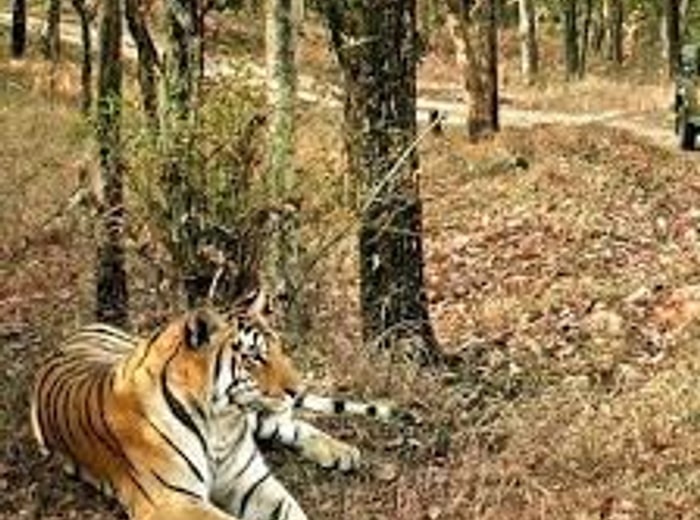

Planning an African safari usually means picking a great private concession, flying into a bush airstrip, and letting the lodge handle the rest.
India is a completely different ballgame.
The subcontinent is home to over 75% of the planet's remaining wild Bengal tigers, but the country’s national park system runs on strict government bureaucracy, rigid permit quotas, and designated forest zones. If you simply turn up at a luxury lodge hoping to figure out your game drives at the front desk, you’re in for a massive disappointment.
Getting your safari right comes down to knowing the ground rules months before you pack your bags. Here is how the system actually works, which parks are worth your time, and how to get your hands on the permits you need
1. Where to Go: Rajasthan or Central India?
India has dozens of tiger reserves under Project Tiger, but unless you’re on a multi-month expedition, your search realistically narrows down to two main hubs: Rajasthan and the deep wilderness belts of Madhya Pradesh.
| Reserve | The Setting | What Makes It Special | How to Fit It In |
| Ranthambore (Rajasthan) | Dry deciduous forest, ancient banyans, and 10th-century ramparts | Best dramatic scenery; easiest to slot between palace cities | The Golden Triangle (by road or express train from Agra/Jaipur) |
| Bandhavgarh (Madhya Pradesh) | Craggy cliffs, dense bamboo thickets, and sal forests | Historically the highest density of tigers; legendary tracking | Pair with Kanha or tie into the temples at Khajuraho |
| Kanha (Madhya Pradesh) | Sprawling open meadows and quiet riverine forests | Classic Jungle Book country; home to the swamp deer (barasingha) | Combine with Pench or Bandhavgarh |
| Pench (MP / Maharashtra) | Open teak woods and rocky hills | Excellent predator mix (tigers, leopards, and wild dogs); easiest logistics | Fly into Nagpur, then take an easy 2-hour highway drive |
If this is your first trip to India and you are already hitting Delhi, Agra, and Jaipur also known as Golden Triangle Tour, Ranthambore is the obvious answer. It slots right between Agra and Jaipur without needing extra internal flights.
If your main priority is pure, uninterrupted wildlife tracking away from crowds, head south into Madhya Pradesh. Kanha and Bandhavgarh give you that untamed, deep-forest atmosphere that’s hard to find anywhere else.
2. Timing Your Trip: What Nobody Tells You About the Seasons
India's core parks are open from October 1 to June 30 (they shut completely between July and September for the monsoons).
Every season brings a clear trade-off between comfortable weather and sighting odds:
- October – November (Post-Monsoon): The jungle is lush, lakes are overflowing, and the air is crisp. It’s breathtaking for photography and birding, but tall grasslands and thick canopy cover mean big cats can walk ten feet past your jeep without you ever spotting them.
- December – February (Crisp Winter): Expect shockingly chilly early morning drives (pack real winter layers—open-top jeeps at 6:00 AM cut right through a light jacket). Tigers love soaking up the morning sun on open dirt tracks and rocky outcrops during these months, making sightings very comfortable.
- March – June (Peak Sightings): By late spring, the grass has dried out, the forest floor is bare, and small waterholes have evaporated. Tigers spend hours lounging in the few remaining pools. Midday temperatures regularly climb past 40°C (104°F), but if your main goal is getting incredible photos of tigers in water, this is your sweet spot.
3. The Permit Minefield: How Booking Actually Works
This is where travelers get caught off-guard.
Unlike hotels, safari permits in India are released directly by state forest departments on central portals. They operate on strict daily quotas per park, per shift, and per zone.
Here are the rules you have to play by:
Your Passport Is Your Ticket
Permits are strictly non-transferable. The forest department issues each permit against your exact passport number and full name. If there is a typo or if you renew your passport between booking the trip and landing in India, you risk being turned away at the gate. Always use the passport you will physically carry on safari.
The Staggered Booking Window
Permits for popular parks like Ranthambore open online in quarterly blocks (roughly 90 to 120 days ahead). Prime dates around Diwali, Christmas, New Year, and Easter weekend sell out in minutes. If you want a private jeep in the core zones during peak months, you need your dates locked down at least four months in advance.
Zone Roulette
Parks are broken into numbered zones to keep jeeps from piling on top of each other. In Ranthambore, for instance, there are 10 zones. Zones 1 through 5 are the historic core around the lakes and fort, while Zones 6 through 10 sit in the buffer and peripheral corridors. While tigers roam through all of them, the landscape and historical sightings vary. Your permit assigns you to a specific zone for each drive—you cannot roam across the entire park freely.
4. Jeep (Gypsy) vs. Canter: Don't Cut Corners Here
When you book, you’ll see two vehicle options: a Gypsy or a Canter.
- The 4x4 Maruti Gypsy (Open Jeep): This is the classic Indian safari vehicle. It seats up to six, but for private, comfortable travel, cap it at 3 to 4 guests. It’s light, fast, quiet, and can turn on a dime when a guide hears an alarm call on a narrow trail. If you care about photography or personal space, this is non-negotiable.
- The Canter (20-Seater Open Bus): These are elevated, noisy open-top buses. They can only travel on the widest main roads, take forever to turn around, and fill up with large groups. Unless there are zero jeep permits left on the entire portal, skip the canter entirely.
5. What to Pack (And What to Leave Behind)
- Wear Dusted Earth Tones: Leave white, red, and neon workout gear at the hotel. Stick to khaki, tan, olive, and brown. Animals notice bright human colors instantly.
- Bring a Face Buff and Sunglasses: The forest roads are unpaved dirt. After following another vehicle for five minutes, everything will be coated in a fine layer of dust. A lightweight buff around your neck and nose makes a huge difference.
- Camera Protection: Keep a simple pillowcase, drawstring dust cover, or dry bag handy. Slide your camera body and long lens into it whenever the jeep is moving between sightings to keep grit out of your dials and glass.
- Pack Layers: An open-top jeep moving at 30 km/h in January feels freezing before sunrise, but by 9:30 AM you’ll want to be in a short-sleeve shirt. Fleece, windbreaker, light beanie—shed them as the day warms up.
Connecting the Dots: Building a Real Route
The secret to a great India itinerary is making sure you don't spend half your vacation sitting in airport terminals.
If you are already doing the classic tourist circuit, build two or three nights in Ranthambore right between Agra and Jaipur. You can take a morning express train or private chauffeur transfer from Agra, do 3 or 4 game drives over two days, and then drive straight on to Jaipur.
For travelers who want serious wilderness without seeing another tourist bus, fly straight into Nagpur or Jabalpur and run a linked circuit through Pench, Kanha, and Bandhavgarh.
Need help securing core-zone Gypsy permits or matching your travel dates to the right lodges? Drop our team a note and we'll check live gate availability for your dates.